|

|
|
|
Hualapai or
Die
by Hildy Gottlieb
Copyright ReSolve, Inc. 2000 ©
|
|
It feels like there is nothing
between me and the freezing cold sky. I am excited beyond words.
It is dark and it is winter. We are in a tiny
4-seater plane, heading to the ground-breaking of the Hualapai Lodge, the
culmination of ReSolve's 2 years of work with the Hualapai's tribal tourism
enterprises. The other 2 seats in the plane are taken up by Fe Tom, an amazing
architect and a better friend, along with an architect that has worked on the
project from Fe's firm, Brice, who is also our pilot.
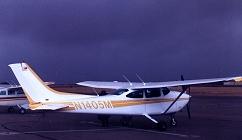
| We are in a tiny
plane, heading to the ground-breaking of the Hualapai
Lodge. |
|
 |
I've never been in anything smaller
than a jet before. The weather calls for winter storms up north, but Brice has
factored that into his plans. The full moon is still high in the west, and it's
really cold up here. I am soon to see sunrise from 5,000 feet above the ground,
with virtually nothing between me and the sky.
For my maiden voyage, Brice has put
me in the front seat beside him. I'm not sure what I'm supposed to be doing or
not doing, and yet I can hardly sit still. I'm awkward and excited all at once,
the way most first times generally feel. |
| |
|
The first time we got to know
anyone at Hualapai - that first day we drove down Diamond Creek Road, down into
the Grand Canyon and straight to the Colorado River - it felt much the same
way. Nervous, unsure, excited - there was an adventure coming, we could feel
it. And we were at the very beginning of it, with no clue what to expect or how
to react.
It's
September, still summer. We are supposed to meet with Margaret, the manager of
Hualapai River Runners, the enterprise that is anticipated to generate most of
the hotel's guests. We can't even think of starting our feasibility work
without talking with Margaret.
 |
We are on time for our appointment,
but Margaret is swamped. She runs so much of this enterprise herself, and she's
just returned from the 90 mile round trip to Kingman, buying provisions for the
next day's river trip. She barely acknowledges us. Finally she tells us we'll
just have to come back another day.
Talk about awkward. We've traveled
all day - a 6 hour drive - to find our appointment isn't going to happen.
Dimitri gets up and walks over to the table where Margaret is wrapping
potatoes, corn on the cob, steaks - barbecue provisions. I'm afraid of what
he'll say. But he says nothing. He simply starts to wrap, right along side her.
I join him, and there we are, silently wrapping the food.
We
start to ask a few questions about how this back end of the trip works. She
answers as we ask. We can't take notes, hands covered in steak juices, but the
work is now moving quickly, and soon we are done. Margaret looks at us for the
first time since she's arrived. "I can talk to you now," she
says.
|
|
Brice is telling me about flying,
about the dangers, about how to tell when you're in trouble. I ask him about
the thing you hear most about small planes, ice on the wings, and he explains
about drag and lift and a whole bunch of things I don't understand but act like
I do. Here's what I get most out of what he is saying: "A lot of the rest of it
is really just experience. But in a tiny plane like this, when you start
getting ice on the wings, there's not much you can do but head down. Quick."
I've always thought it would be neat to learn to fly. Here in my first few
minutes in the air, talking with Brice about all it entails, I have already
decided there's just too much to learn. |
| |
|
We have so many questions, all
written out in order to make sure we get all the information we need. But
Margaret is talking about how the summer rains have played God on her road, the
only road in the whole world that allows you to drive to the bottom of the
Grand Canyon. The road Margaret relies on to bring people in for river trips.
Her lifeblood. She is feeling like she ought to see the damage for herself, so
she can figure out what to do about it.
Lets go look at it," we
suggest. "Take us down to the river." And before we can motion to each other,
Margaret is calling Norman, ReSolve's guide for this whole project. She is
commandeering him to drive us all down the canyon, almost like you would do
with a kid brother or a son. Within minutes, we are in the van, and Norman is
maneuvering the rocky terrain into the Grandest Canyon in the
world.
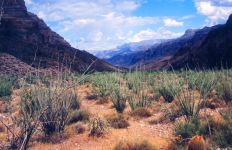 |
Within minutes, we are
maneuvering the rocky terrain into the Grandest Canyon in the
world. |
We ask lots of questions on the way
down, about the road and the river and the whole river rafting operation. They
respond in short answers, barely offering any information we don't specifically
request. We will learn soon enough that is a trait among this people, a trait
we will try to consciously adapt ourselves to as we complete our work.
For now,
though, we notice that there are some questions that get long answers,
sometimes after long silences. And those are the questions about their lives.
Suddenly, they are talking, to each other and to us, about what it felt like to
grow up in a white world. They are sharing sentiments that will echo through
all our work in Indian Country. "Even though I knew the answer, I wouldn't
raise my hand," Margaret says. And Norman is surprised that he isn't the only
one who felt that way. "The Hualapai are taught we are no better than anyone
else. Who would I be to raise my hand and answer the question? A
show-off."
They are marveling at the
similarities in their experiences. This is clearly not a subject that would be
approached if not prompted by curious outsiders. The more they share, the more
frequently they are saying, "I didn't know anyone else felt that," and the more
they continue talking. The sharing is intoxicating, loosening tongues that have
been taught over centuries to be still.
"It makes it hard to be a manager,"
Margaret confesses. "If I am no better than anyone else, who am I to tell
someone else what to do? Your authority is always in
question."
Norman continues the thought. "Did you ever hear the
expression that the nail that sticks out gets pounded down? That's pretty much
how we are brought up to think."
Dimitri and I are drinking in every word. It is all new to
us, seeing the world through new eyes - eyes that may look at the same thing as
we do, but see something completely different. It gets quiet as we get closer
to the bottom. Suddenly, Norman stops the van and looks at us. "If this project
ends in a ceremony or groundbreaking, don't thank me. You have to promise that
or I won't talk with you anymore. Don't publicly thank
me."
|
Brice tells us that we have to make
a stop at the Grand Canyon before going to the groundbreaking, to check
progress on another project they are doing for the tribe, out at the rim. The
moon has set now, and the sun has come up, but its rays are streaming through
clouds and it's still not warming up. It's starting to get turbulent - clearly
that storm is coming. Brice turns on the radio to scan for news of our
destination.
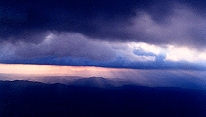
| The moon has set, and
the sun has come up, its rays streaming through
clouds. |
|
 |
|
| |
|
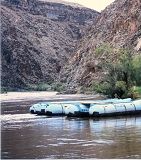
The Colorado is brown and
rushes so fast. It's summer, and still the river is like ice. They show us the
rafts and the docks. We stop at the stream where Hualapai women used to gather
reeds for making cradle boards. A summer storm is starting to gather, and the
sky is dramatic as the thunderheads
build.
"I haven't been down here in a
long time," Margaret tells us. "It's beautiful every time." It starts to
sprinkle, and we wonder aloud together about being rained out, stuck in the mud
with the van along the rocky road out of the canyon. We quickly gather our
things to head back out.
 |
| "I haven't been down here in a long
time," Margaret tells us. "It's beautiful every time."
|
|
They start to ask about us. Like most
people in rural America, they've never met a Jew before, and so here I am, in
the middle of the Grand Canyon with two people whose history is so rich with
loss, and I am talking about the history of my own people - 5,000 years of war,
of losing our lands and our names and our lives. Dimitri tells of his mother's
village, how she herded sheep and goats in the mountains of the Peloponnese, a
land that had been occupied for so many hundreds of years by the neighboring
Turks. History repeating itself, all over the globe, right before our
eyes.
We climb out of the canyon as the rain is beginning.
It is a typical summer storm - violent with thunder and lightning, pouring down
a river of water that will eventually end up right where we were, the Colorado,
filled with the run-off and mud of centuries, of
millennia.
|
| The plane is rocking now, and
visibility is starting to diminish. Brice is talking non-stop on the radio by
this point. Fe and Dimitri and I, trying to think of other things, take to
reminiscing about our work together on projects before this one, and how this
has been somehow different, more challenging and more exciting and more
rewarding. Fe has designed the beautiful Hualapai Lodge from what was
originally slated to be little more than a Motel 6. We had been so glad to get
him involved in the project, but right now, as the tiny plane keeps forcing its
way forward, all of us are thinking twice about the whole thing. |
| |
|
We're becoming a team. We don't
know it right then and there, but we are taking the first steps in the dance
that is friendship across cultures.
We will learn that Margaret was
the secretary at River Runners when the manager was fired and she was expected
to take his place, not an unusual occurrence in an area with such a tiny
workforce from which to choose its business leaders. We will learn that she
created everything we see, and that she has been running it successfully for 20
years. We will learn that the very nature that allowed her to succeed is feared
among her peers - her aggressive style, her boot straps
approach.
And we will learn that we will do
this dance over and over, each time we meet, spending the first few moments of
every meeting in a sort of meditation - Margaret continuing her work and
ignoring us; the two of us sitting and waiting, asking after her family and
other news and gossip until finally, after a bit, she will look up, directly
into our eyes, and ask, "What do you need?".
Personally, I will learn to
like her immensely. Tribal members and other work acquaintances will continue
to be surprised that Margaret will give me the time of day. I will enjoy each
of our encounters, including the time it takes, each time, to warm up together
again.
We also don't know right now that
Norman will be a friend for life. That he will drive us all over the rough back
roads of the rez at breakneck speed and that we will laugh whenever we are
together. That our friendship will last long past this project; that he will
unexpectedly show up when he is in our neck of the woods; that we will care
about each other's families and futures.
|
OH MY GOD WHAT WAS THAT? We've
fallen 500 feet, like a rock. Brice is trying desperately to pull us back up.
The radio tells us we will never get near the canyon, and so we are heading to
the airstrip at Peach Springs, for the groundbreaking ceremony that we are
cursing right now, speculating that it will be canceled and that we will have
died for nothing.
The wind is buffeting us
from every direction, and it has started to snow. We approach the landing
strip, and the wind tosses us about. We lift back up, try again from another
direction. Each time, the wind and snow drive us back. We can't land anywhere.
Fe is curled up in the back, trying not to throw up. My knuckles are a shade of
white I never dreamed possible.
Brice points
for me to look at the wings. Ice. There is ice on the wings. The only thing I
remember from our lesson in flying. We are going to die. |
| |
|
The last time I see Margaret,
we are finishing up our work. We have spent the whole day providing the
Enterprise Board with our final recommendations, and we have packed our things
to move out. We are teary to think our work over the past 2 years is done.
Margaret is in the lobby as we
are leaving. "You're going," she says as she approaches. I nod. She reaches
over and hugs me. "I bet you learned as much from us as we did from you," she
says. "I'm glad we could be friends." It is everything I can do to say, "Yes,
me too.".
|
There is a chance, if we head
back towards home, we can land midway between Peach Springs and Tucson, in
Prescott. We don't have enough fuel to get home; Prescott is our only hope.
Brice sees a small break in the clouds - his
one chance, but we'll have to climb into it. He starts to circle. Slowly,
against the wind and against the ice, he circles. Round, then round, then round
and up and up and slowly, he climbs through that hole, to where the sky is
blue. "Feel that?" he asks me. "Feel a bit woozy?" I tell him I figured it was
fear. He smiles and shakes his head. "Oxygen. We're at 14,000 feet. Too high.
But it's either lack of oxygen or that storm."
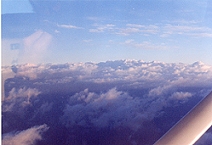
| He circles up slowly,
climbing through that hole, to where the sky is blue.
|
|
 |
We approach the landing
strip at the Prescott airport, and the tower tells us we have one chance. We
are coming in at 100 mph when Brice takes us down through the clouds. Suddenly
we are heading into the wind. It is slowing us down till it places us
gracefully onto the runway. We are on the ground. We are alive. Oh my God, we
are alive.
The storm is now so bad that Brice
has to tie the plane down to keep it from blowing away. The rest of us, old
friends, huddle together. By now, the storm is a blizzard. "I'm not flying," I
tell them. "Get me a cab, get me a rental car, get me a hotel room - I'm not
flying." We head to the restaurant of the tiny airport, eat a bit to settle our
stomachs, call home. Dimitri rents a car, while Fe calls his wife. And they
close the airport down. We are the last plane to land.
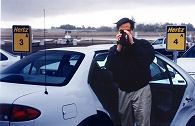
By the time we get to the car, we are giddy. We have faced death
and won. We are taking pictures of each other in the snow, videotaping each
other kissing the asphalt and grinning. We are alive and on the ground and life
is suddenly no better than these white rental cars in the snow.
| We are taking
pictures of each other in the snow, videotaping each other kissing the asphalt
and grinning. |
|
 |
They saw us, we
found out later - saw us circling just before the groundbreaking was to begin.
Norman didn't get thanked, and Margaret doesn't work there anymore. Norman is
still our friend, and we ask him forgiveness for mentioning him in this
story.
But we have an excuse. We almost died.
That has to count for something.
(To
respect the privacy of our friends, we have changed their identities for these
stories.)
|
|
 |
|
|